Material studies
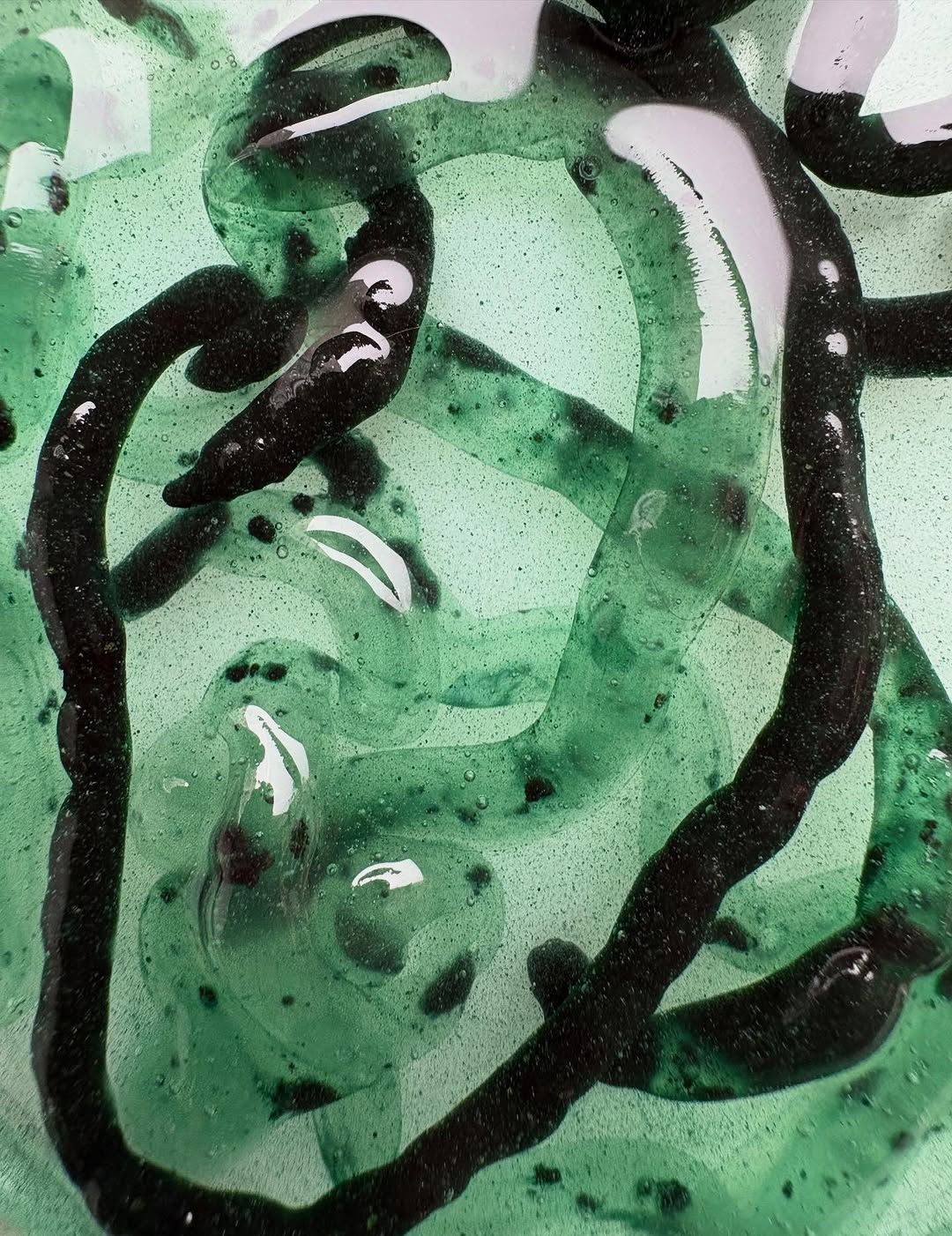
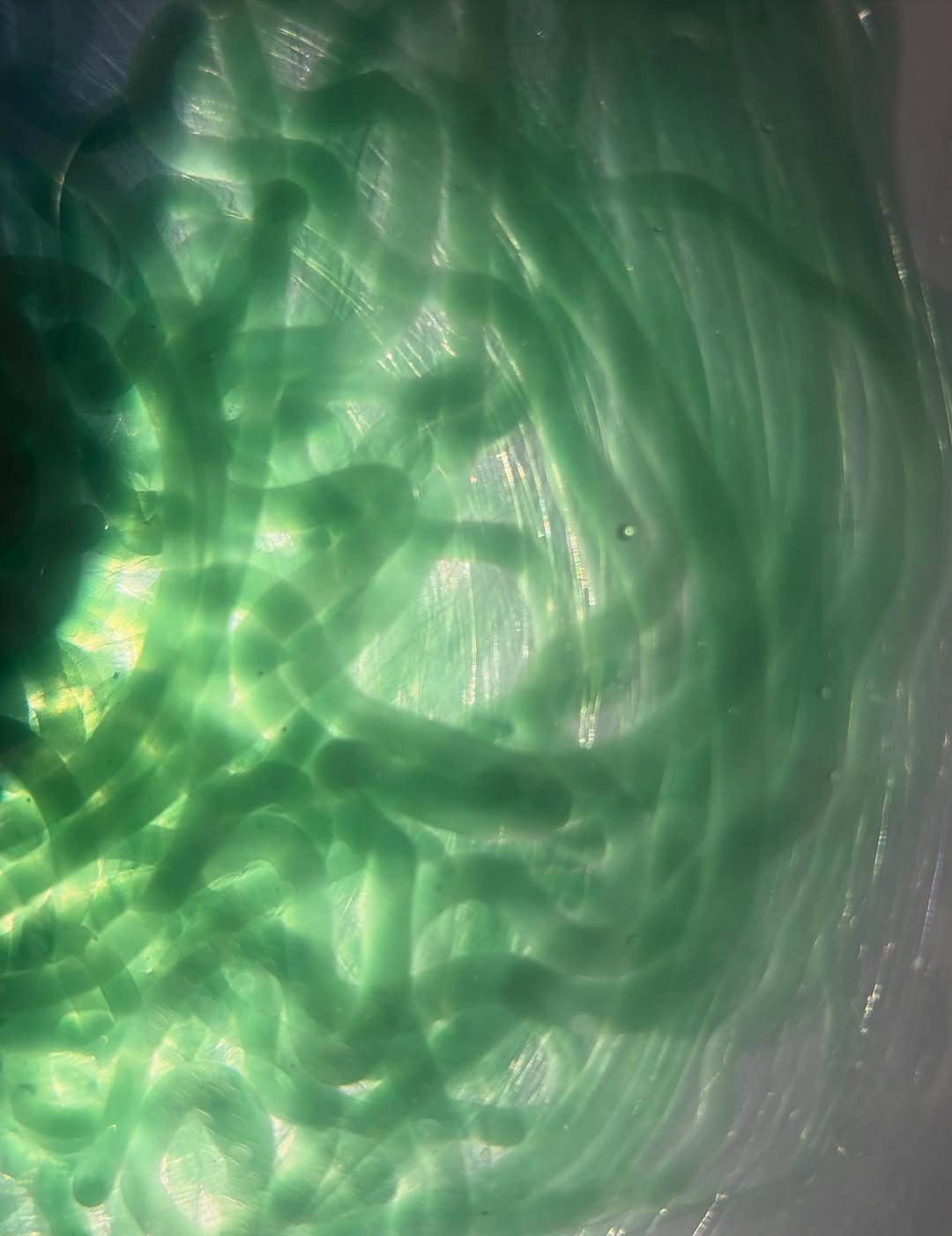
These are my material studies — some resolved into objects, some still alive in the lab. Each begins with a single question and a material that behaves in its own way.
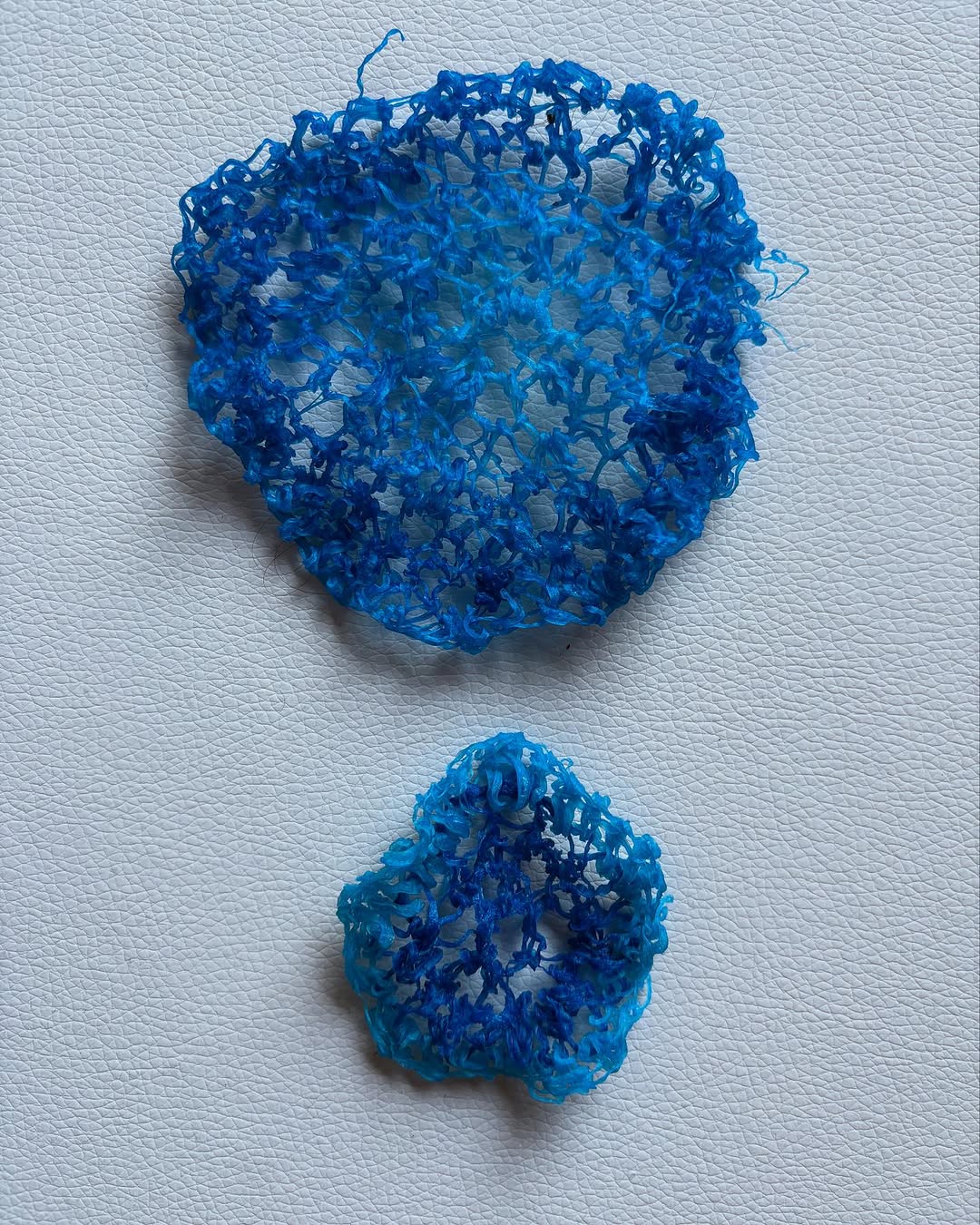
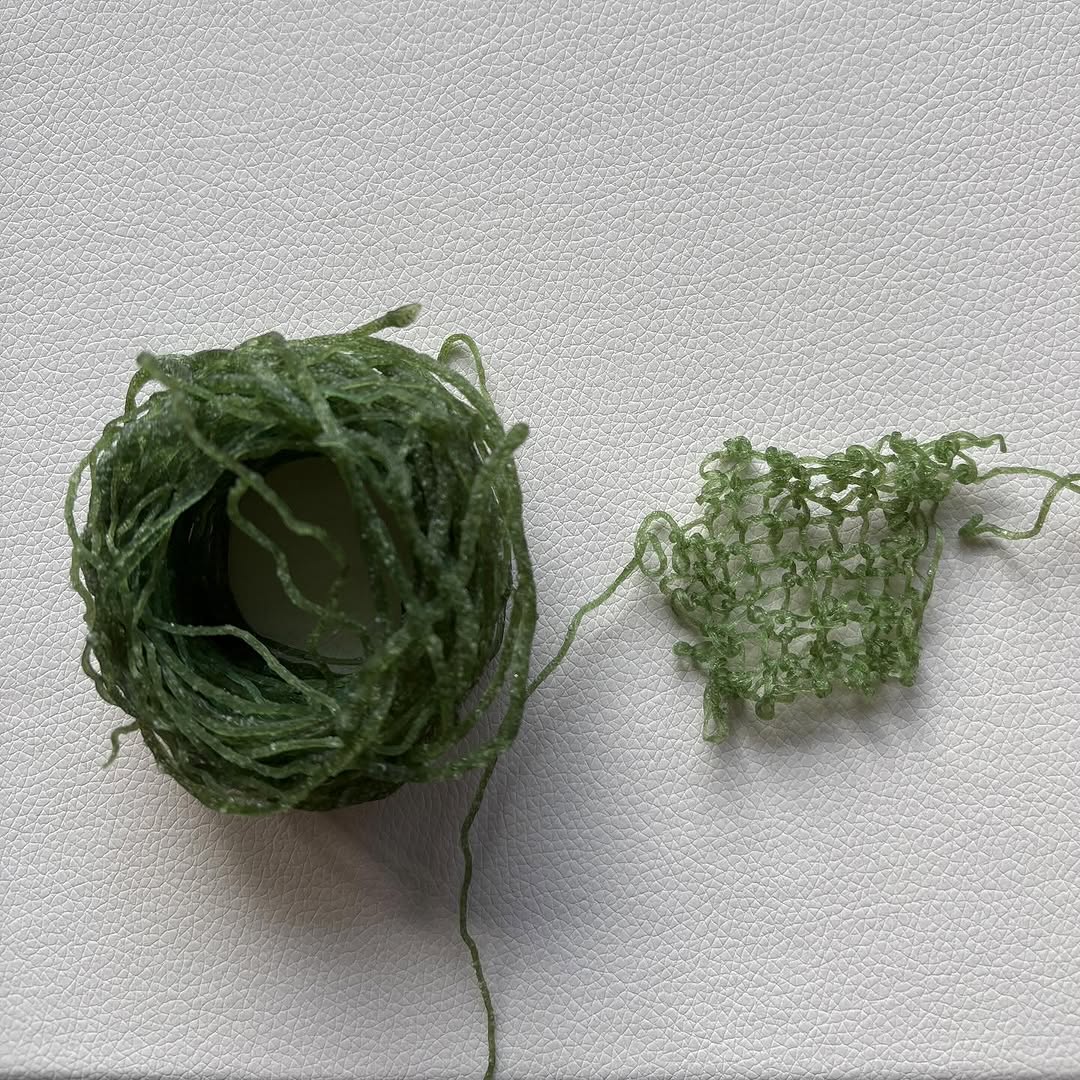
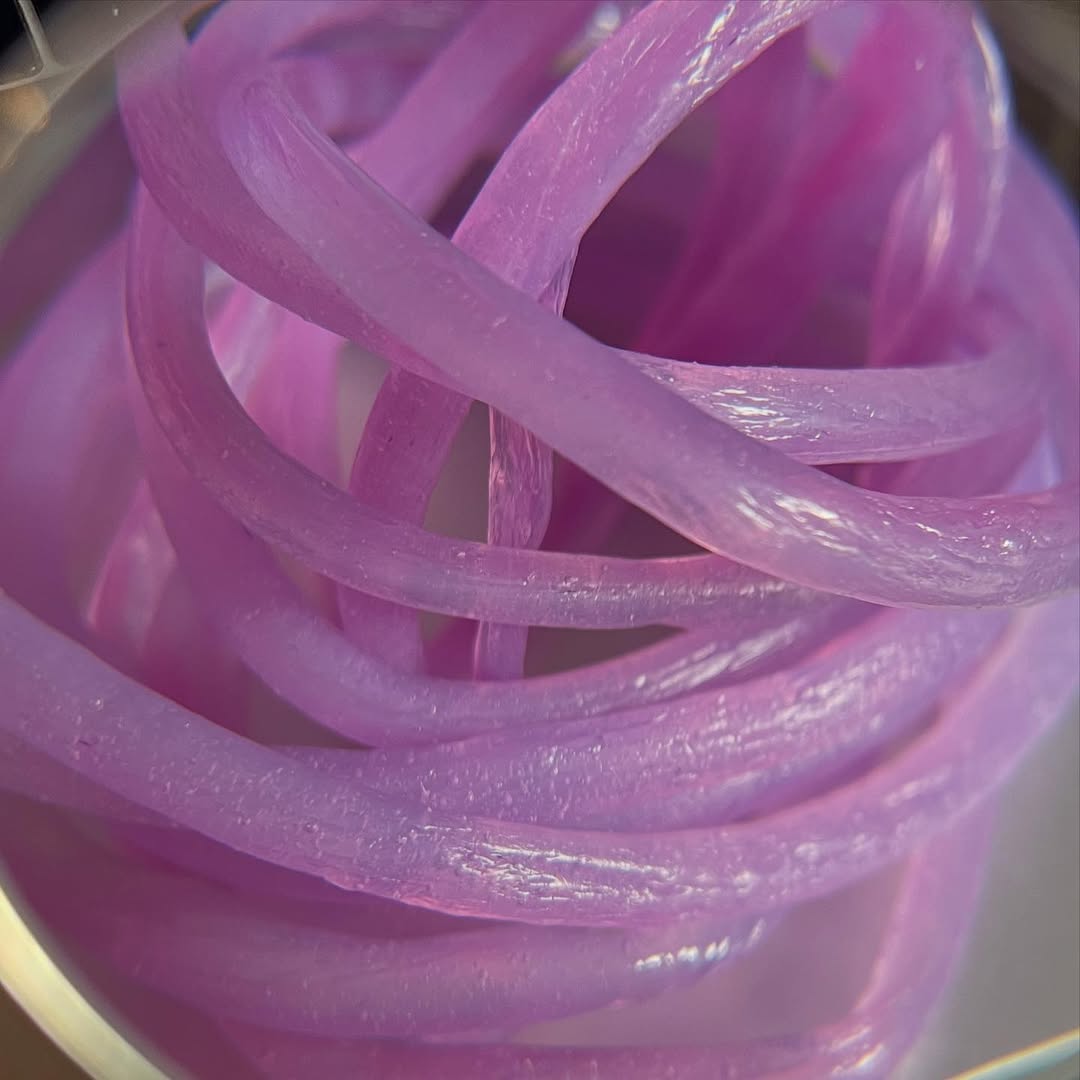
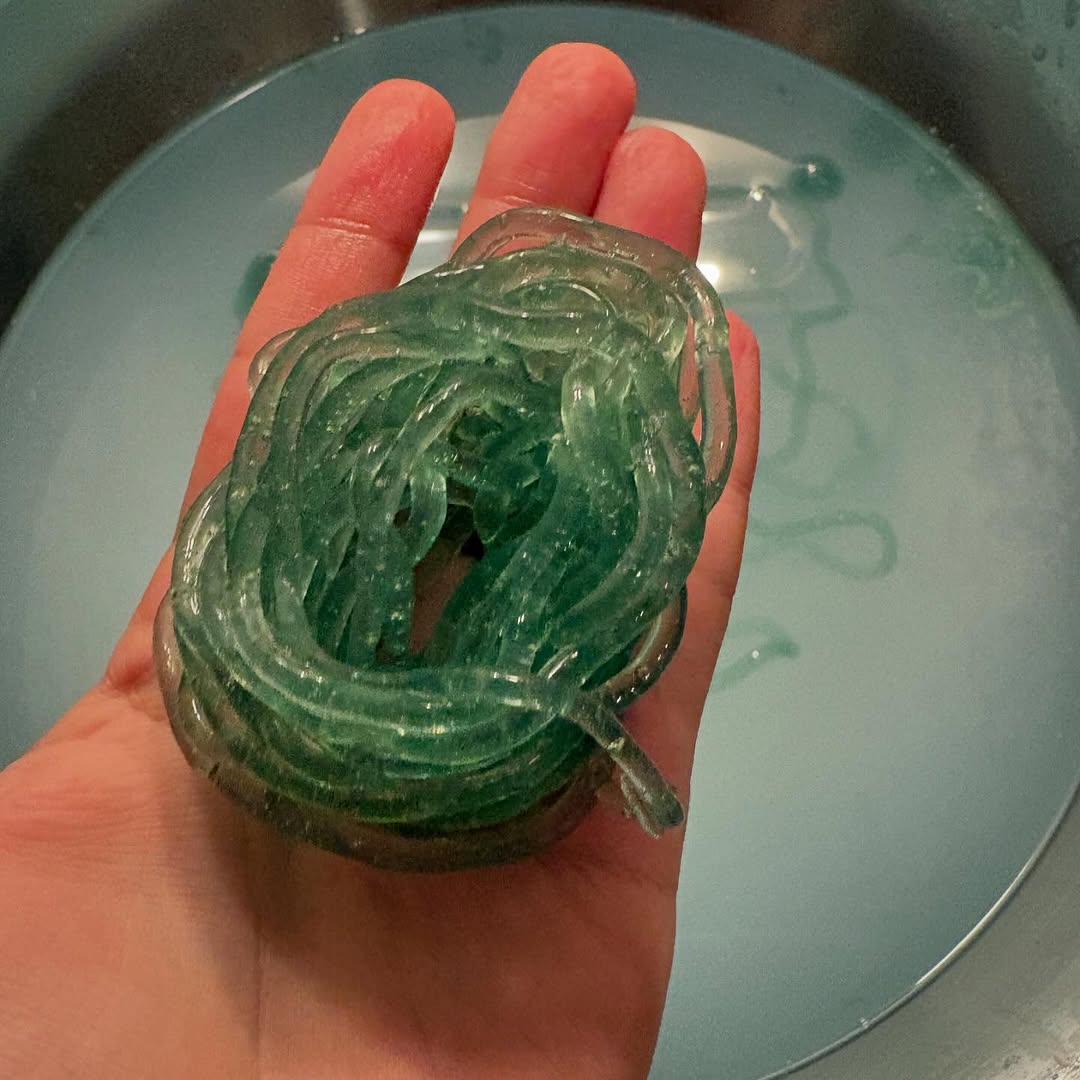
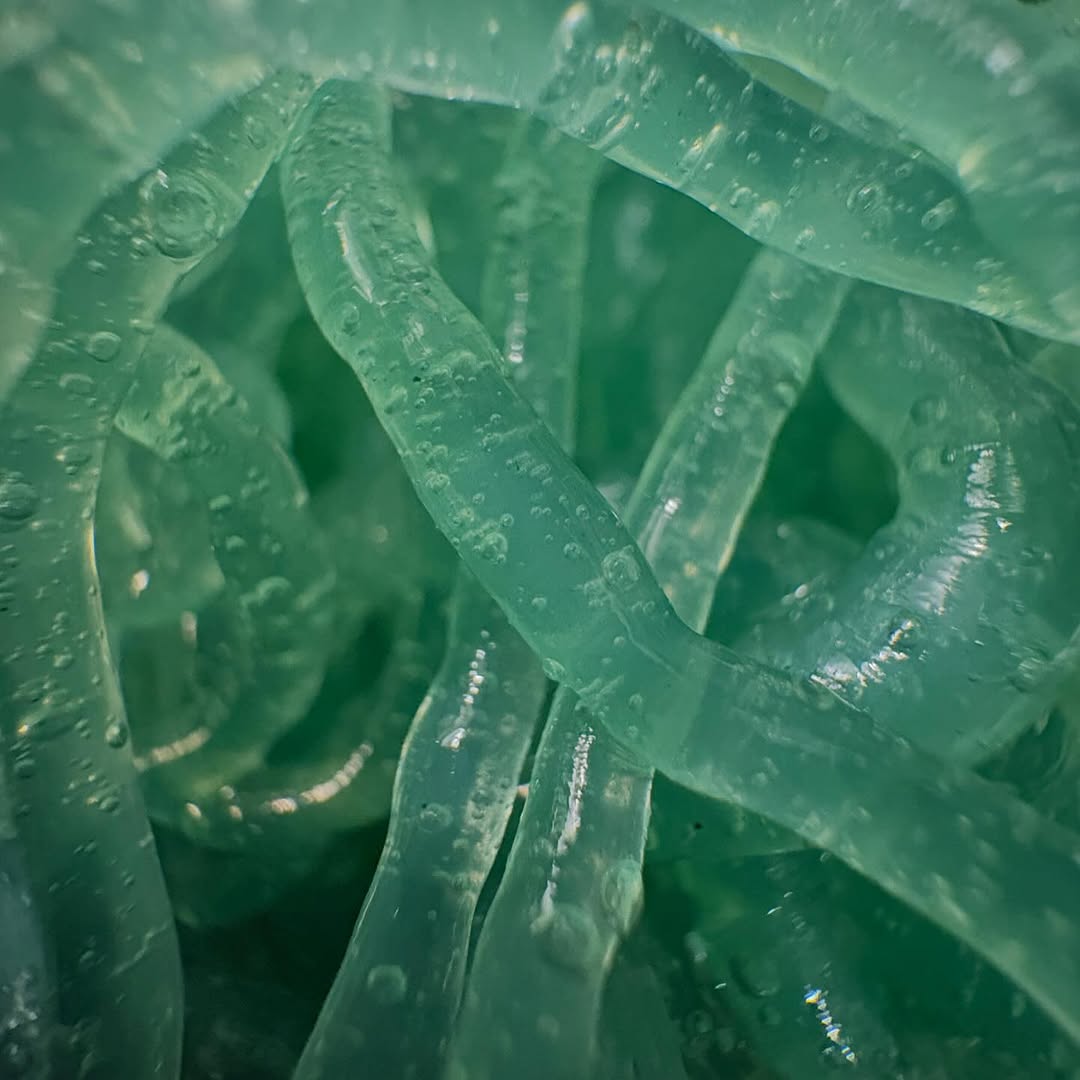
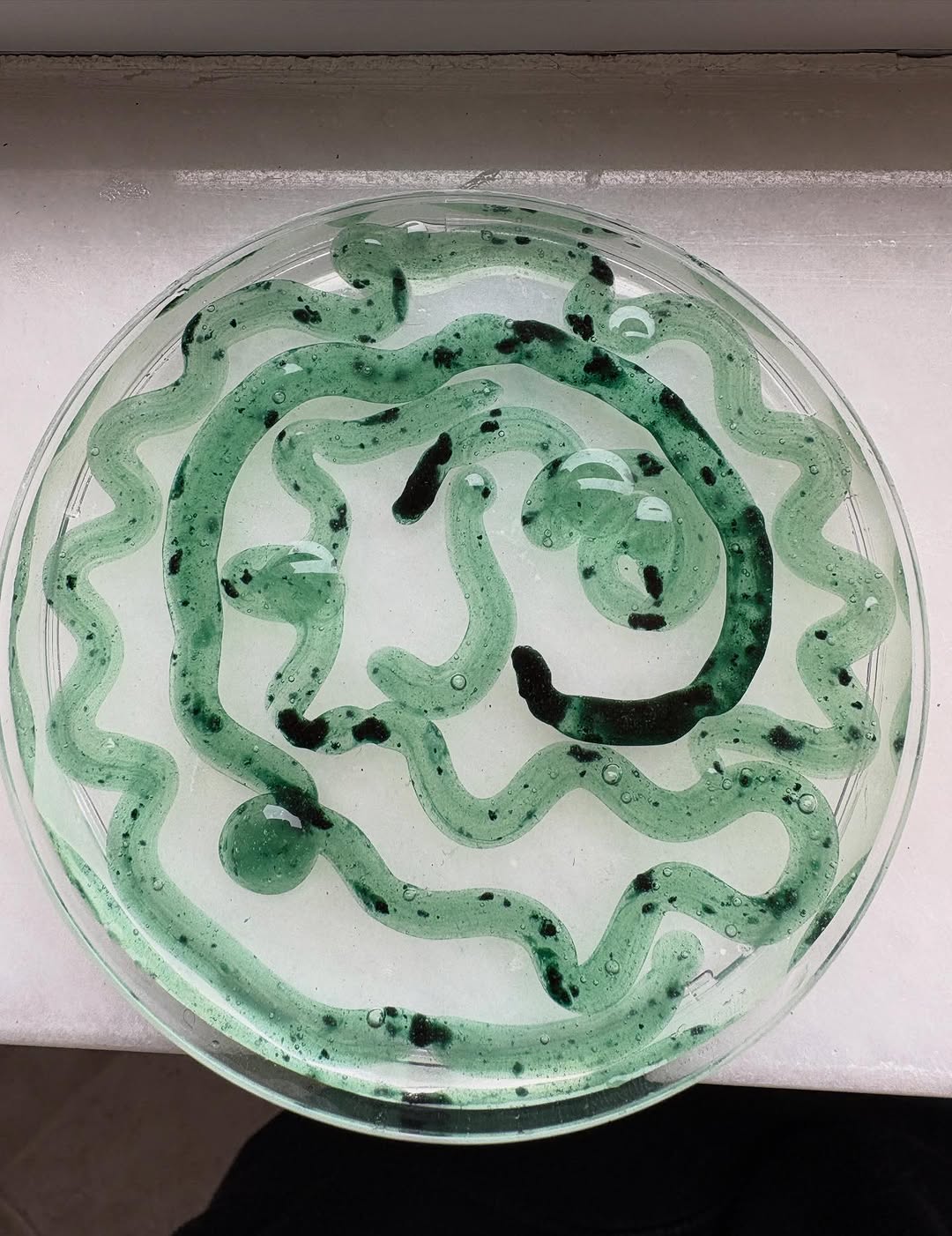
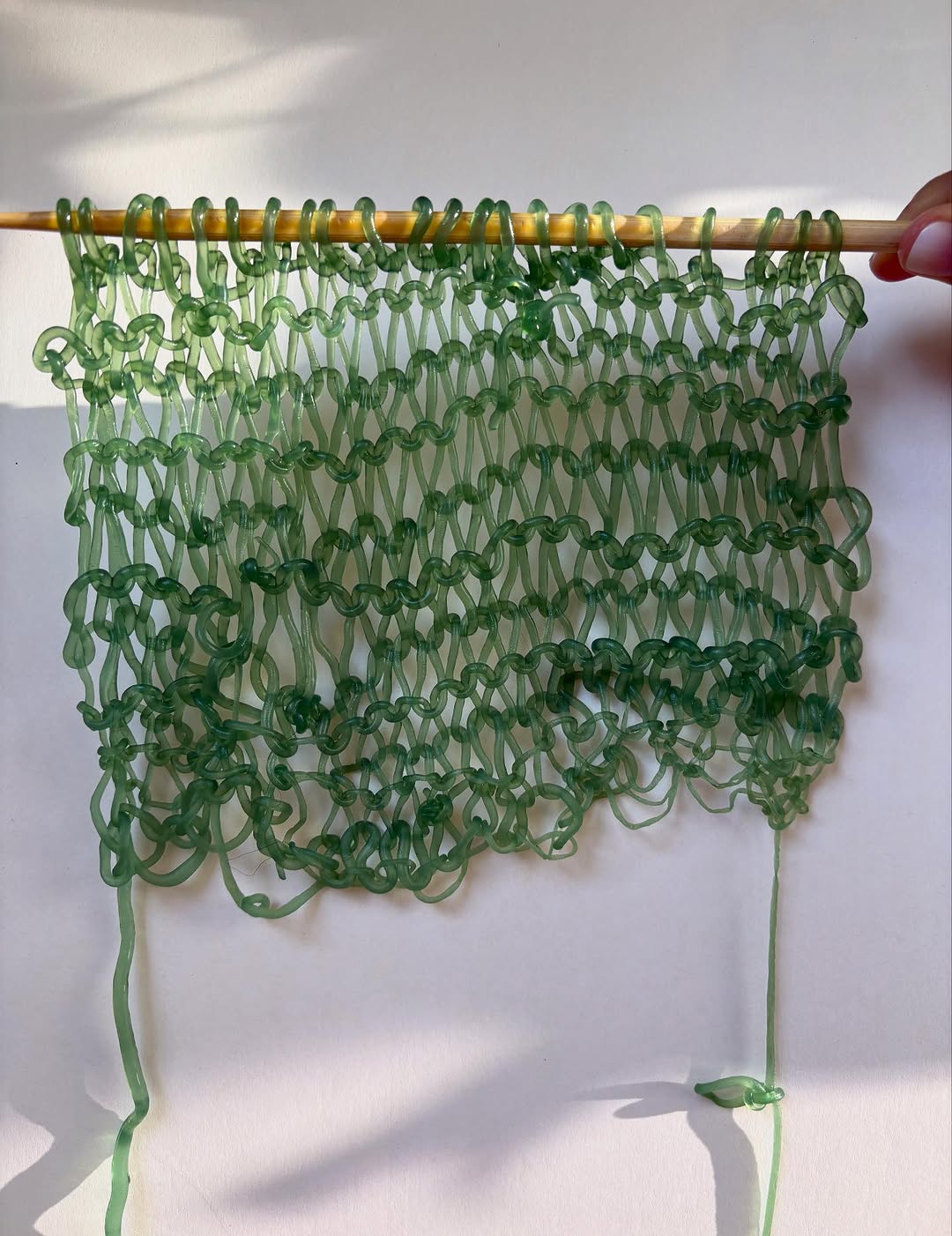
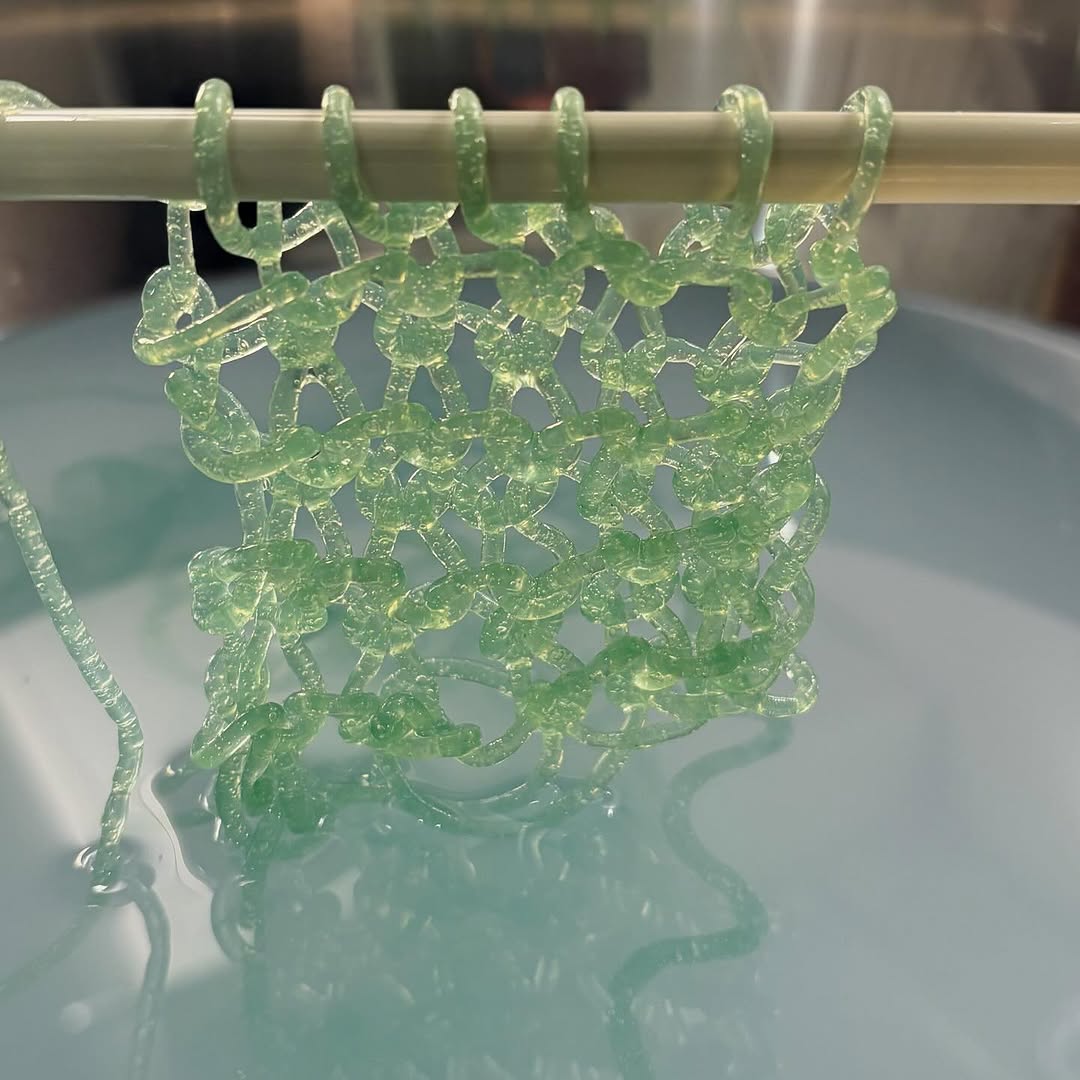
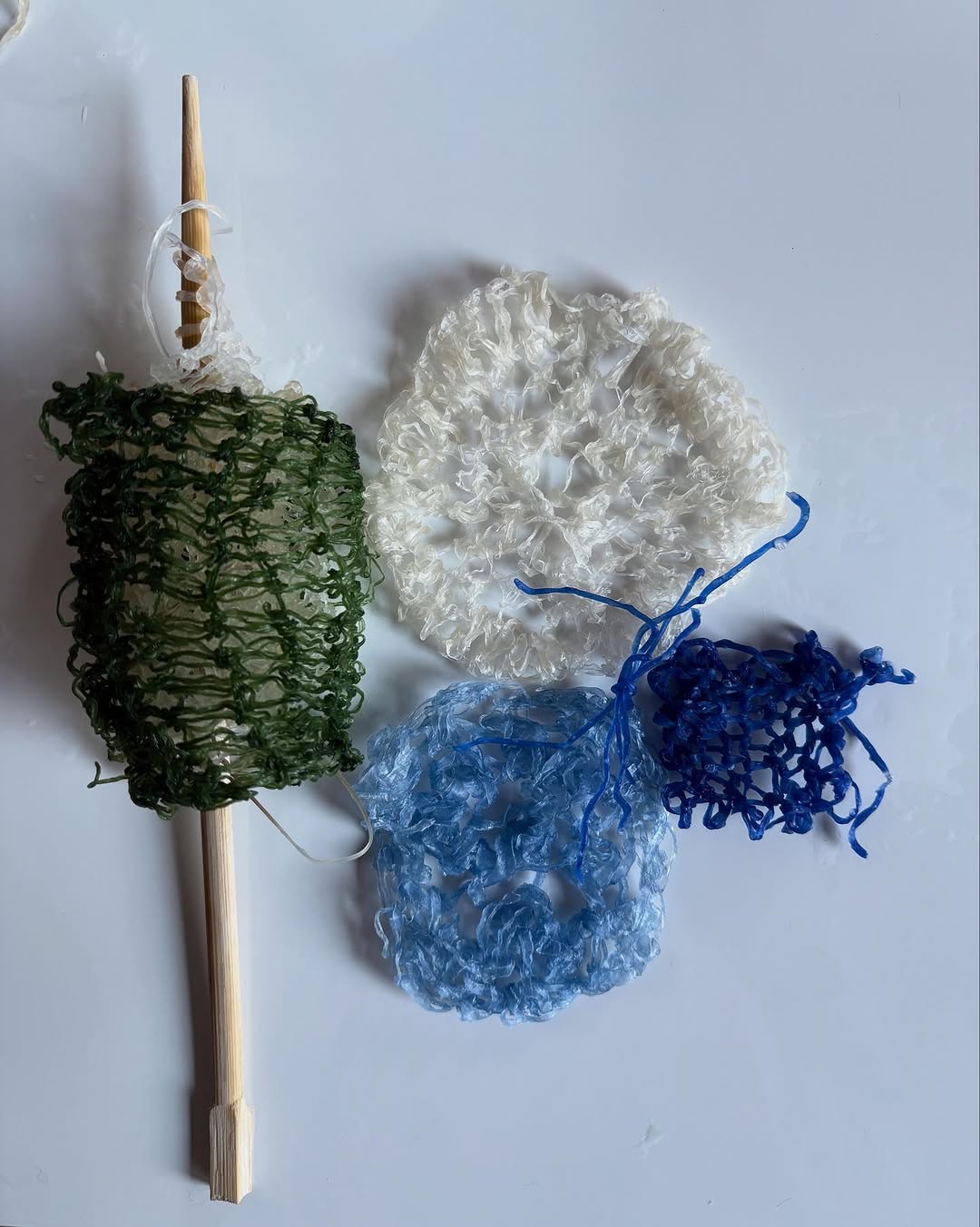
The material I keep returning to. Sodium alginate — a polysaccharide extracted from brown seaweed — is combined with water, glycerine, and mineral pigment, then extruded by syringe into a calcium chloride bath. The gel crosslinks into structured yarn in minutes. It can be knitted while semi-dry, crocheted, woven.
The yarn comes in two confirmed pigment systems: ultramarine mineral oxide (deep blue, cosmetic-grade) and spirulina (a blue-green microalgae, producing the green variant). Each batch is slightly different. That is not an imperfection — it is the material's honesty.
Bioyarn biodegrades in water. It returns to the ocean it came from.
In use
Mother of Pearl — Luxe Pack Paris 2026 · QUANTUM WORLD SS25 — Fashion Graduate Italia 2024
"I explore the creation of a living material dialogue between the organic intelligence of mycelium and the textural memory of textiles."
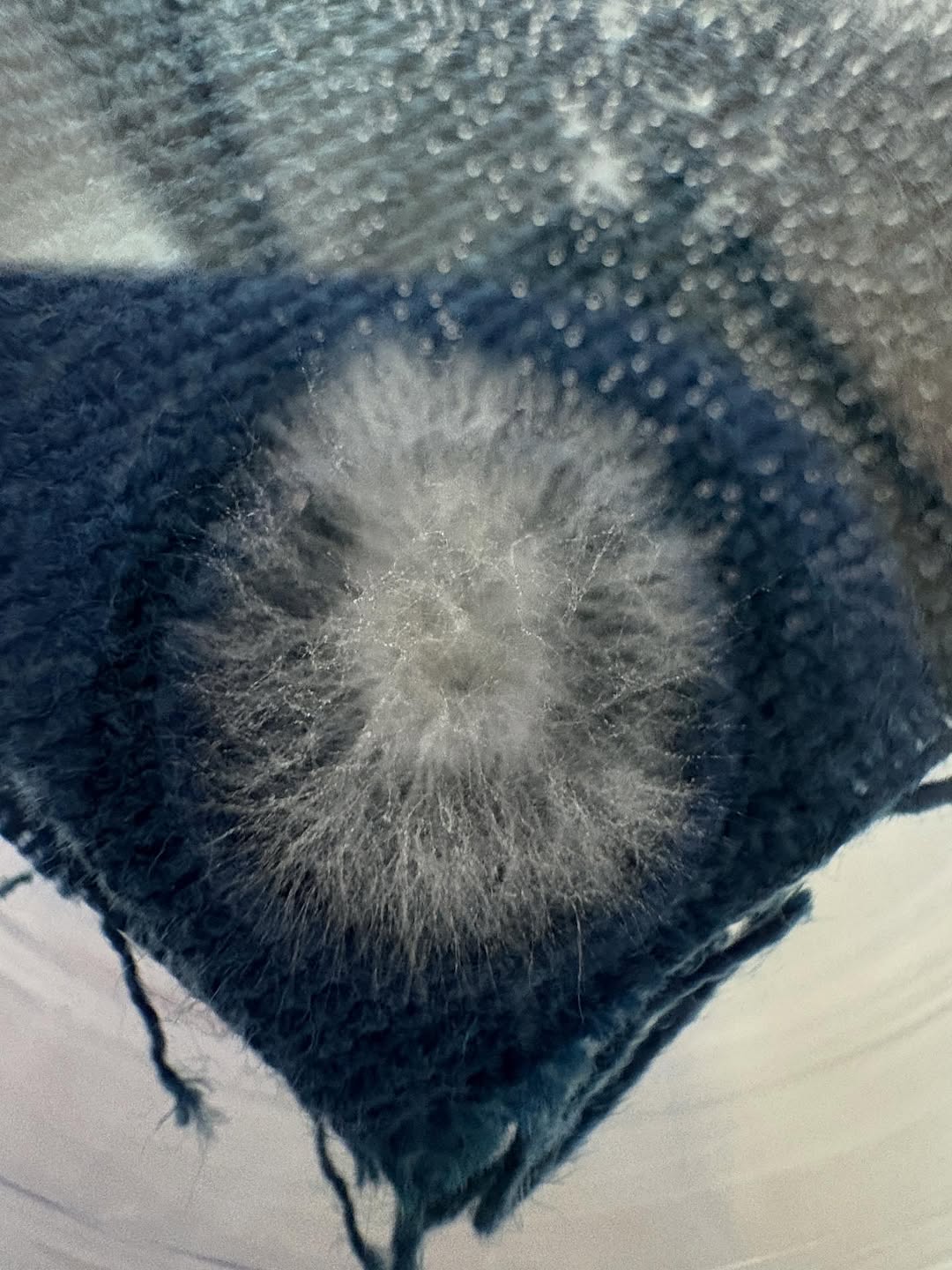
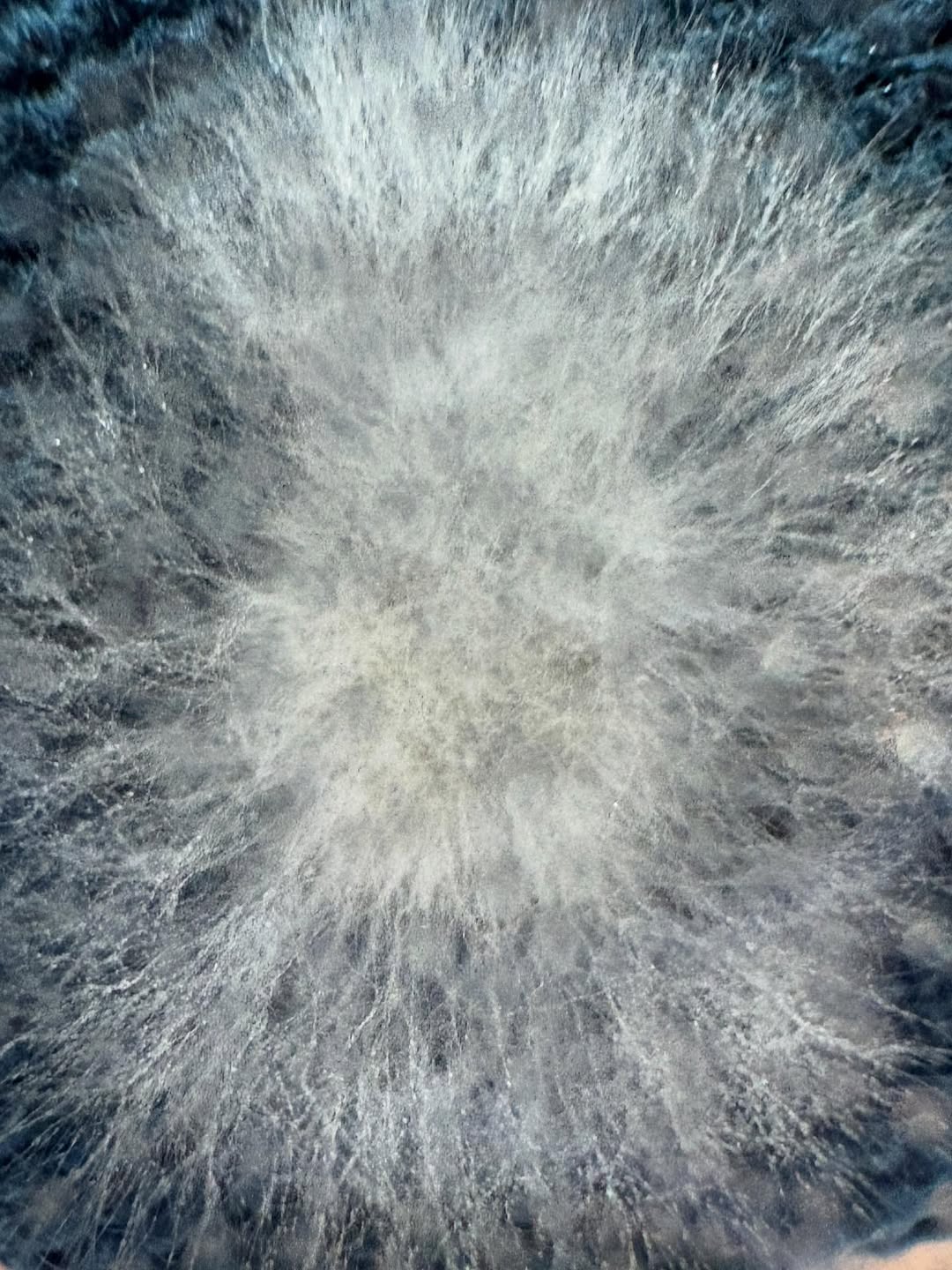
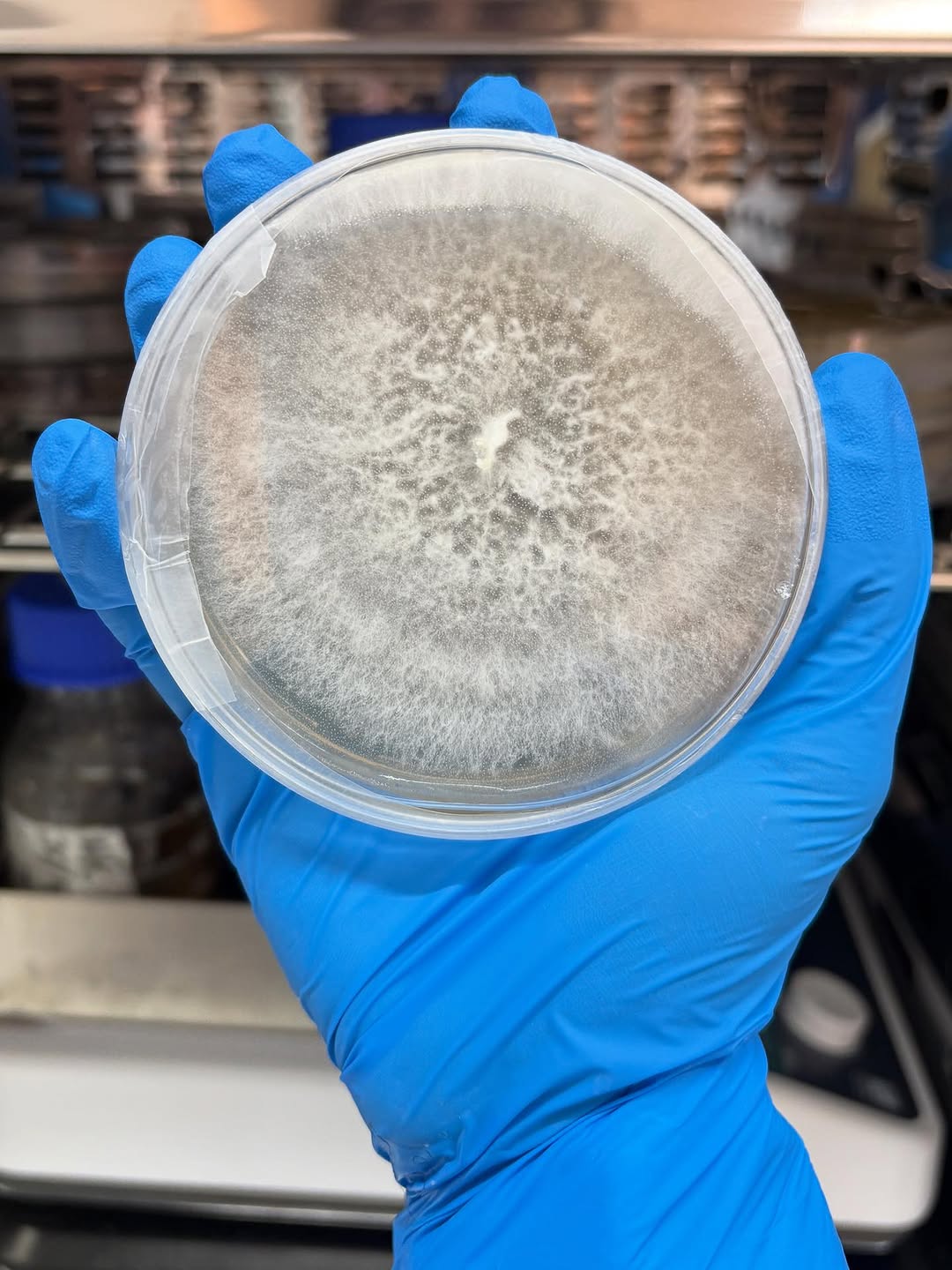
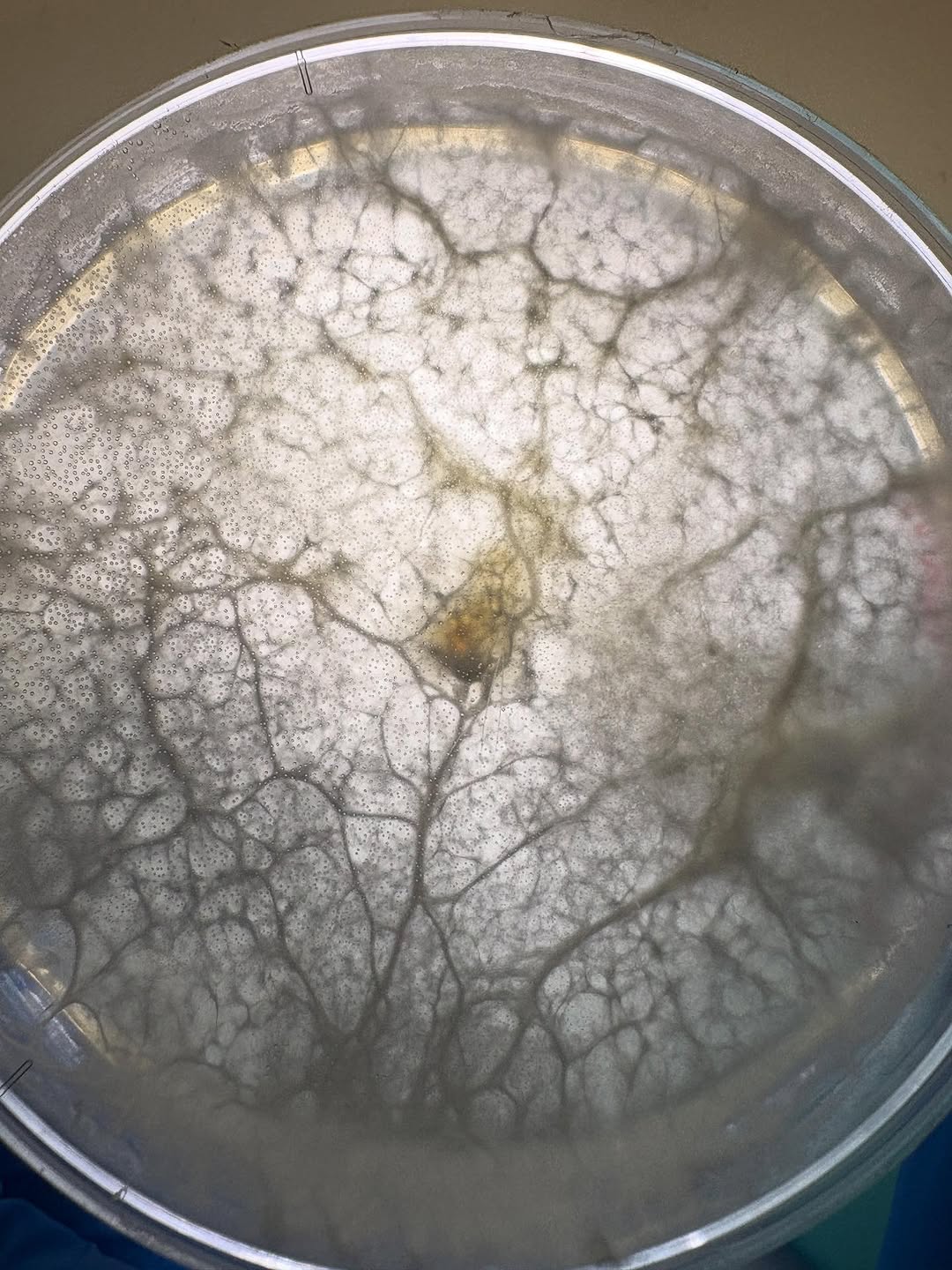
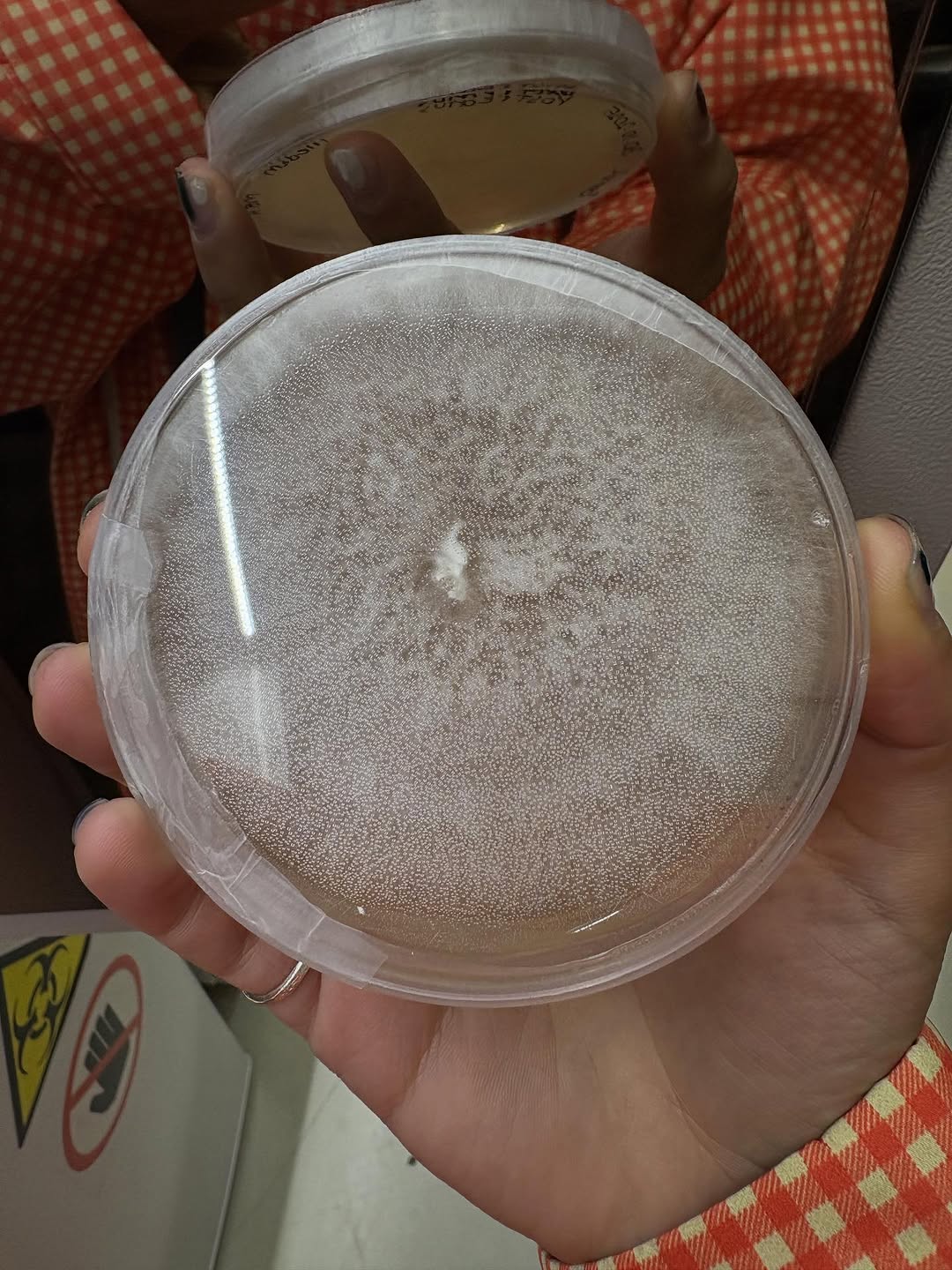
Mycelium — the root network of fungi — grows through the gaps in a knitted textile mesh, binding itself to the fibres as it colonises the material. The result is a hybrid: part living, part woven. The mycelium filaments (hyphae) fill the negative space of the textile structure and become structurally integrated as the culture dries.
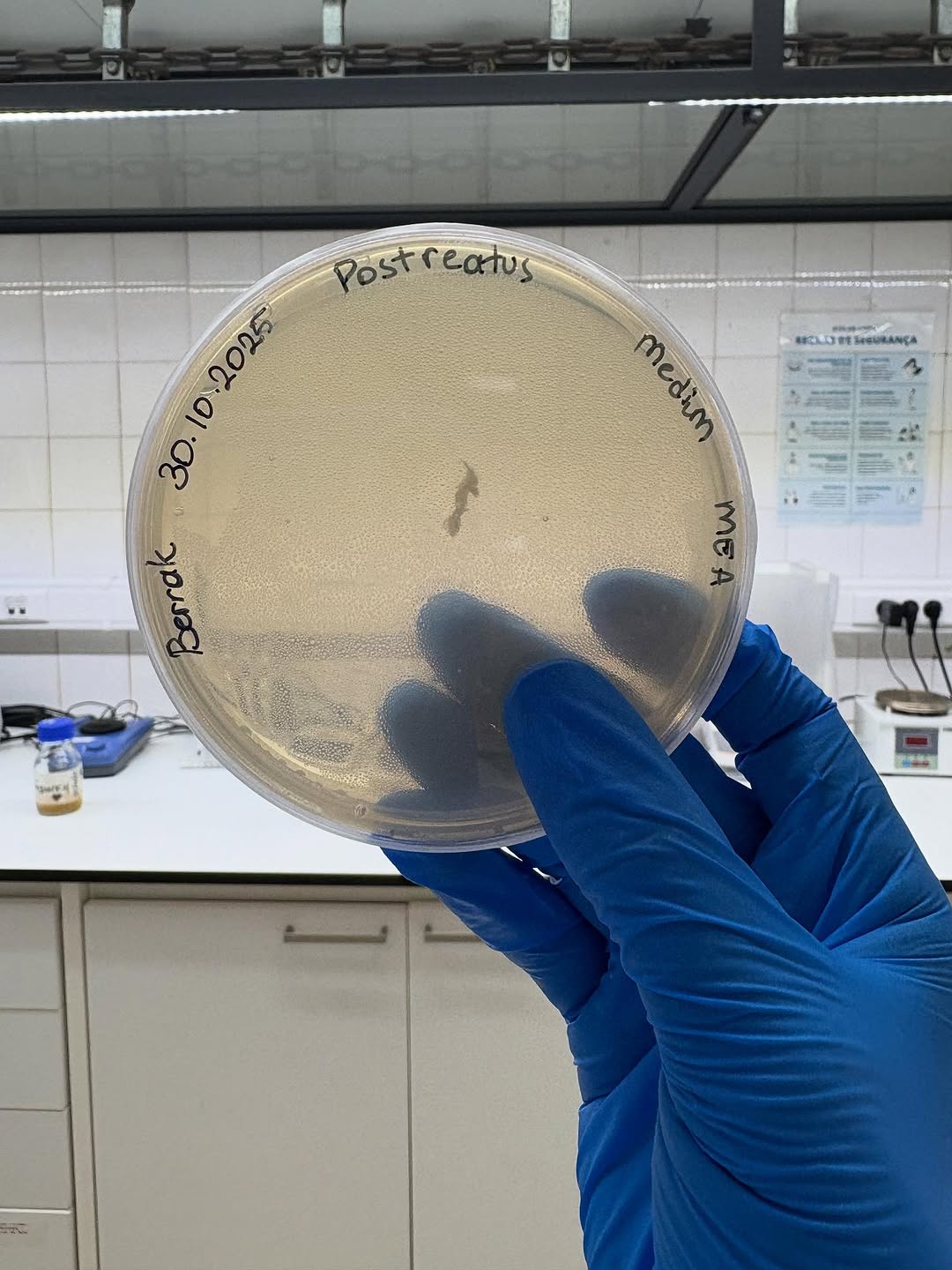
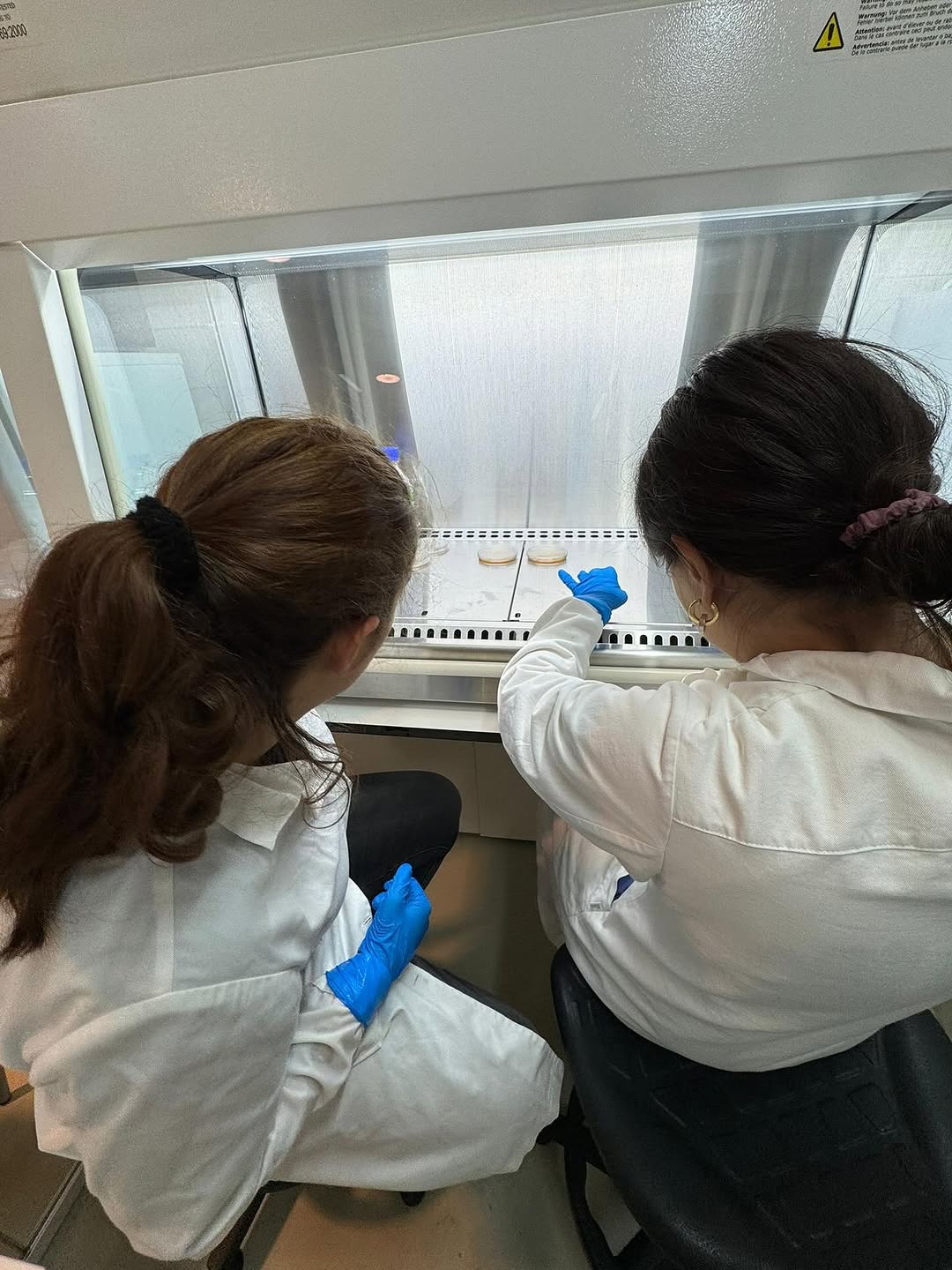
This research is conducted at Biolab Lisboa under the supervision of Magda Barreira Novo, in full alignment with laboratory biosafety protocols. It is the most experimental thread of the practice — pointing toward a third product category beyond packaging and accessories: living textile composites.
In use
Research — Fabricademy 2026 · Biolab Lisboa
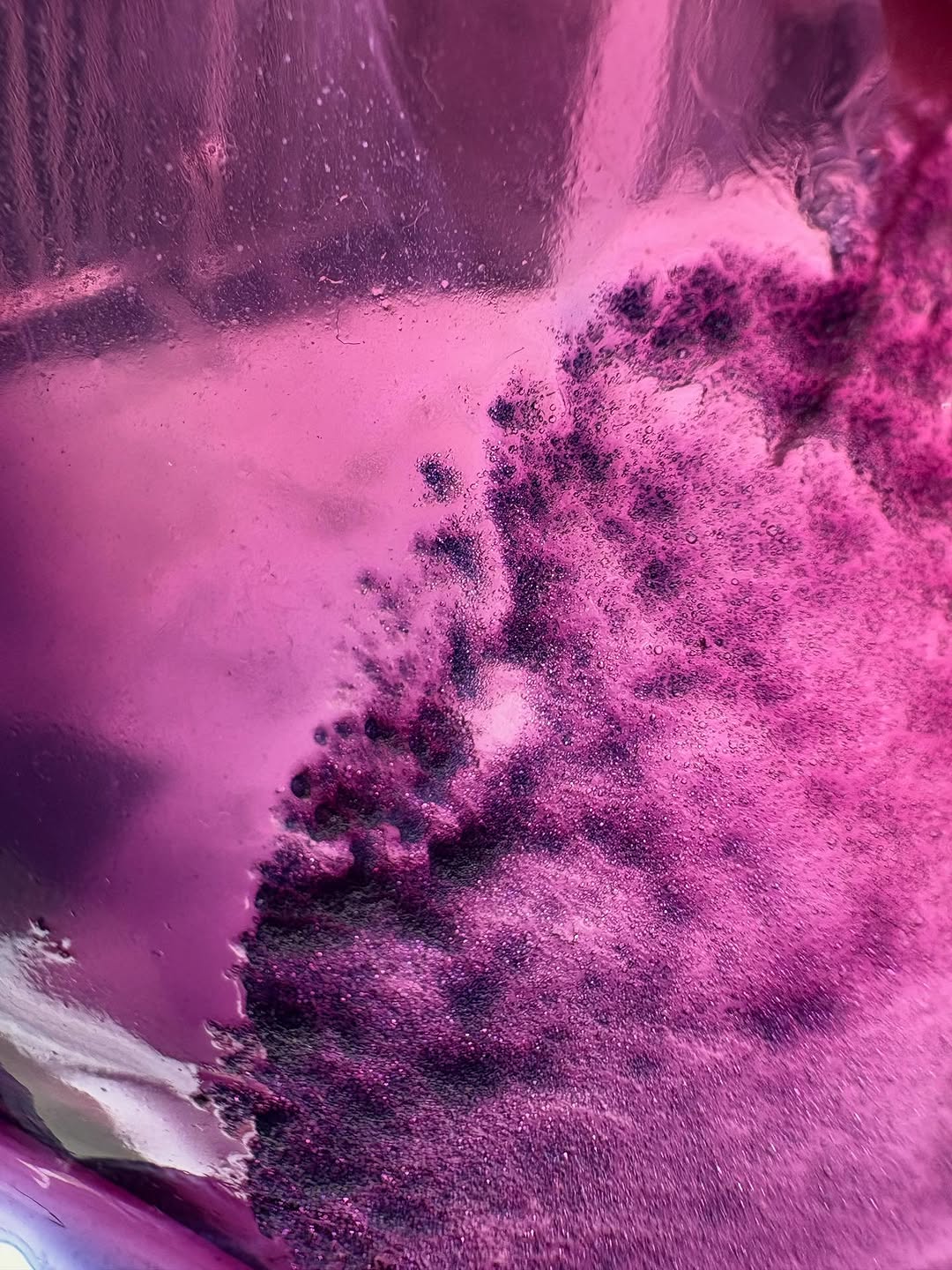
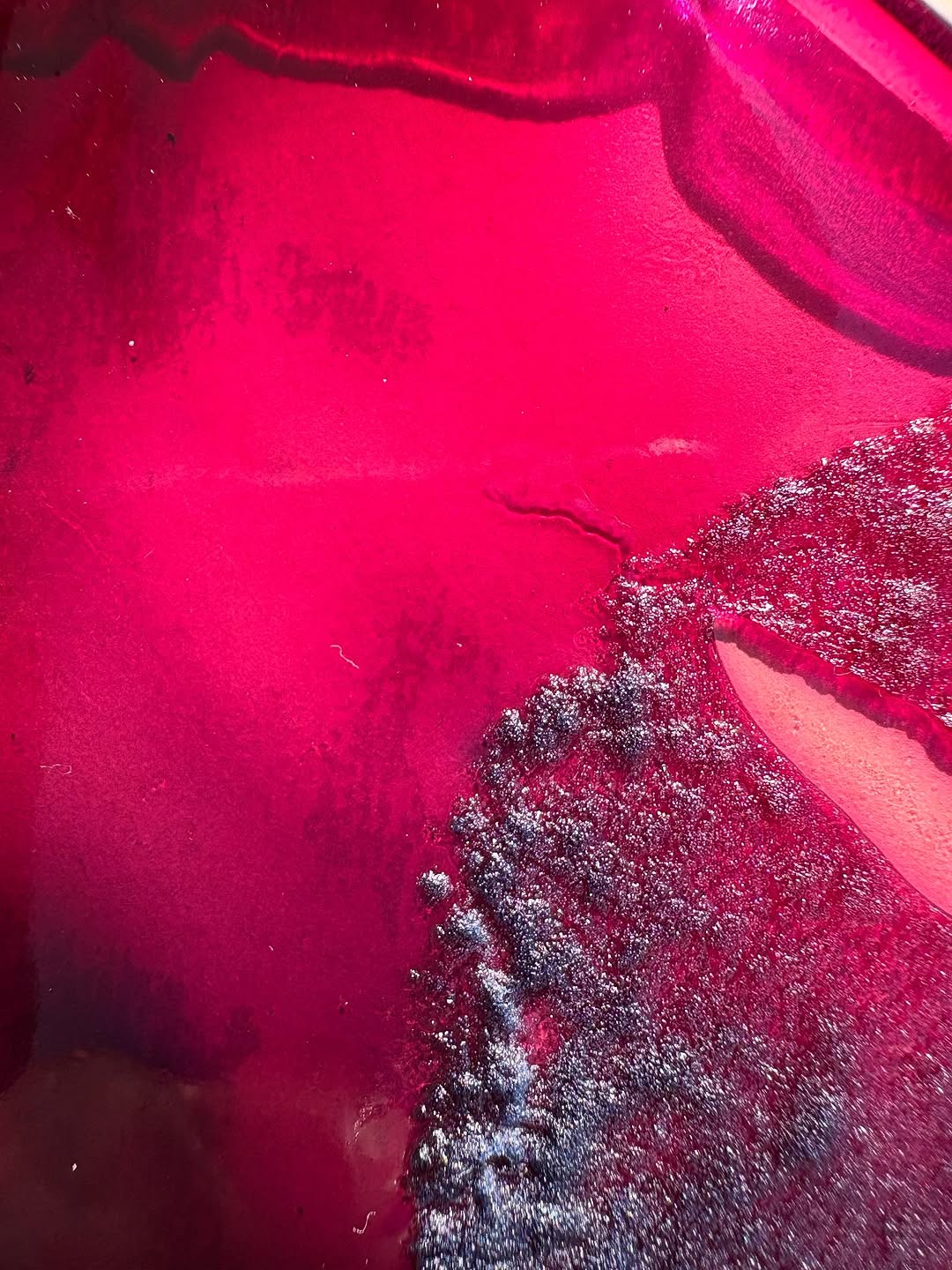
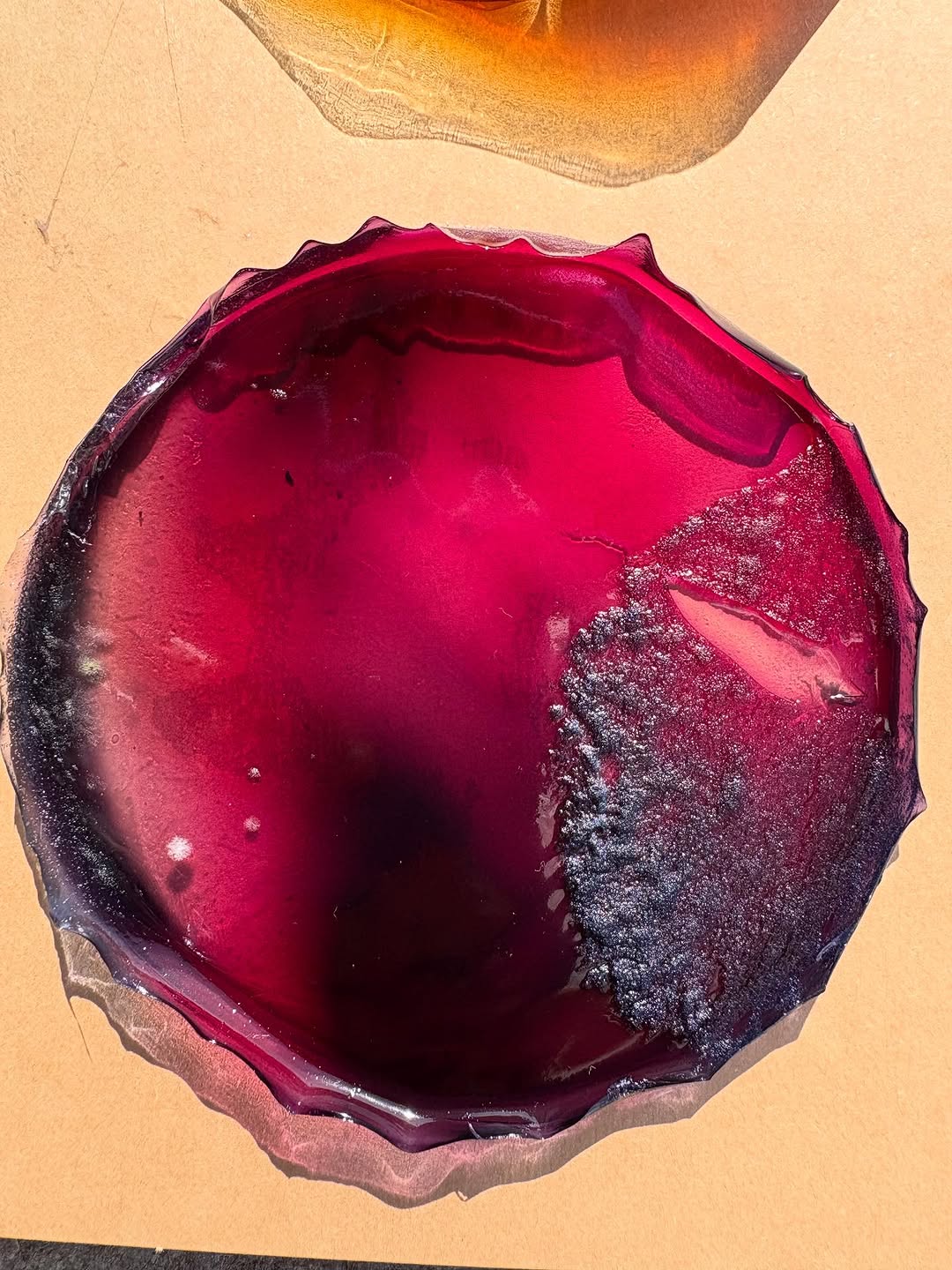
Natural pigment systems using pH-reactive plant extracts incorporated into alginate biofilm. Red cabbage (Brassica oleracea) produces a spectrum from acid pink to alkaline green — the same molecule reads differently depending on its ionic environment.
The resulting biofilm is both material and color: a translucent, flexible membrane that carries its hue from within the structure, not as a surface coating. This work emerged from Fabricademy's BioChromes module, developed in collaboration with Carlotta Premazzi under the mentorship of Speculative Materials.
In use
Research — Fabricademy 2026 · Biolab Lisboa
"Could ferrofluid be combined with biomaterials? Ferrofluid reacts to magnetic fields with dynamic, fluid motion; if integrated into biomaterials, it might create distinctly artistic effects."
FERRO explores the tension between two seemingly opposite material realities: the raw, permanent nature of iron and the fluid, disappearing quality of bio-based materials. Protective, sculptural silhouettes are shaped by magnetic field interaction — spiky, liquid forms frozen at the moment of maximum tension. The process uses laser-cut modular components (20 pieces assembled as one) and 3D-printed mold creation.
In use
FERRO — Fabricademy 2026
Would you like to hold one of these?
Ask me for a sample →